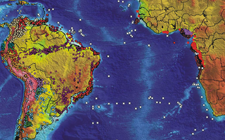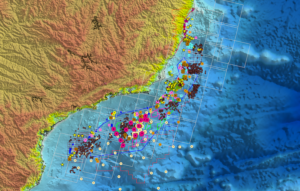
Regional Geochemical Evaluation of Crude Oils from Great Campos Basins Southeast Brazil
Diamondoid Study
In its continuing effort to provide a more thorough understanding of the various Petroleum Systems contributing to reserves in Brazil, GEOCHEMICAL SOLUTIONS INTERNATIONAL INC. (GSI) has conducted a detailed geochemical characterization of forty-nine (49) crude oil samples selected from the Campos, Santos and Espírito Santo basins of southeast Brazil. These oils, which were previously characterized using conventional geochemical analytical techniques whose results were documented in the basin-specific crude oil studies of the Campos, Santos and Espírito Santo basins, have been analysed to determine the relative abundance of diamonoids. Results are used to 1) provide a more accurate assessment of relative maturity, especially in the zone of oil destruction or cracking, and 2) to further evaluate the possible contribution of light oil or condensate derived from pre-salt lacustrine source rocks in order to identify areas of mixed provenance.
Diamondoid hydrocarbons are an extremely stable class of compounds that occur naturally both in crude oils, highly mature condensates and natural gas accumulations (Petrov et al., 1974; Wingert, 1992). Several studies have focused on the application of diamondoid hydrocarbons in petroleum characterization. Among them Chen et al. (1996) proposed two diamondoid maturity ratios to determine the thermal maturity of thermogenic gas and condensates and Dahl et al. (1999) used the relative abundance of diamondoids to identify the occurrence and estimate the extent of oil cracking. A more recent investigation by Schulz et. al. (2001) conducted on solvent extracts from marine siliciclastic shales, marine carbonates and coals of a wide variety of maturities clearly shows that diamondoid distributions are related to differences in origin (i.e., source facies variations) as well as thermal maturity variations. Therefore, since diamondoids are extremely thermally stable and somewhat resistant to biodegradation, they have potential application in both oil-source correlation and oil-oil correlation in cases where the traditional biomarkers are absent due to either severe biodegradation or thermal cracking. In addition, this information is valuable for constraining basin models designed to predict oil cracking and to improve the understanding of regional oil and gas distributions.
Results of the study are presented in both analytical and interpretive formats to insure that all findings are accessible to explorationists and research personnel. All geochemical data is provided in digital format in a database contained on CD, which includes a proprietary data browser to facilitate access. A synthesis and interpretation of all information is presented in an interpretive report.