Home > Studies and Projects > Petroleum Studies > Regional Studies > Great Campos North Campos
  Great Campos  
Petroleum Systems of The Great Campos Basin

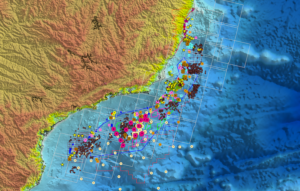
Petrobras recently announced several new deepwater discoveries south of the Jubarte and Cachalote fields in the BC-60 exploration block. Initial reserve estimates are in excess of 1.1 billion barrels, increasing the probable reserves in the block to more than 2 billion barrels. According to Petrobras, these discoveries mark the presence of a "new oil province" in the northern Campos Basin.

Geochemical Solutions International, Inc. (GSI) and its technical partner WesternGeco NSA Interpretation Services are proposing a new petroleum systems study that will have as its focus this emerging oil province as well as on ANP Round 7 acreage.

The Petroleum Systems of the Northern Campos Basin study will have as its main objectives:

• Identification at a sub-regional level the main kitchen areas and drainage cells in the northern Campos/southern Espírito Santo region
• Analysis of hydrocarbon generation and migration, including volumetrics
• Assessment of timing of hydrocarbon charge both for known fields as well as some of prospective regional structures
• Assessment of regional variations in oil quality
• Identify key risk elements for hydrocarbon exploration in the region

Technical Approach
The technical approach will involve creation of a regional “integrated 3-D data cube” consisting of geologic, geophysical and geochemical data, which will form the input for modeling of subsidence, thermal transfer and petroleum generation, migration and accumulation:

Modeling algorithms - The regional petroleum systems assessment will be accomplished by means of a multi-point, map-based flowpath simulation models (so-called 2.5-D modeling) using the Genesis and Trinity basin modeling software from Zetaware. Modeling results will include simulation of source rock thermal evolution, quantitative estimates of oil and gas generation through time and space, migration dynamics due to buoyancy, capillary and hydrodynamic drives, migration pathways and fetch areas, trap fill and spill history, etc. Special attention will be paid to the timing of charge with respect to reservoir temperature, an important control in the development of heavy oil accumulations. Simulations will attempt to reconcile observed variations in oil quality in nearby deep-water fields (Roncador, Jubarte, Albacora) in order to identify the key elements that create risk for heavy oil.

Geologic framework –The regional geologic framework would be derived from the PGS Brazil '99 and Brazil 2000 2D multi-client seismic surveys, which have been interpreted by WesternGeco NSA Interpretation Services. Gridded surfaces for key stratigraphic intervals have been extracted from these data sets, including key structural elements (salt or volcanic features). Geologic properties (e.g. lithology and source rock properties) will be assigned to each layer by interpolating values from wells based on the seismic-based stratigraphic model of the area.

The structural evolution of the salt layer is a fundamental issue in the study area which bears on both hydrocarbon migration and oil quality assessments. Salt evolution will be simulated by varying its thickness through time in the 2.5-D model using a simplified approach based on changes of sedimentation rates in the areas surrounding salt structures.

Sub-surface calibration and control – GSI has amassed a vast regional database relating to source rock generation and migration as part of several multi-client studies conducted in the Campos, Santos and Espírito Santo basins. These include source rock, temperature and thermal maturity of sub-surface samples; geochemical assessment of oils, including source facies, thermal maturity and extent of biodegradation for all important reservoir horizons, and evidence for recent hydrocarbon migration through the identification and characterization of seafloor oil and gas seeps. These data will be used to constrain and define regional models of generation and migration as well as to assess controls on the formation of heavy oil deposits.

Deliverables
The data products include technical as well as interpretative reports, distributed on both printed and digital media. All data products generated as part of the study will be distributed to participants, including files generated as part of the simulation modeling.

Timing
Depending on the size of the study area (minimum 5000 km2), the work schedule will vary depending on the time required for input data compilation, organization and quality control.

Images: img 01